







Why Self-Service Isn’t Working At Your Airport
 29th June 2026
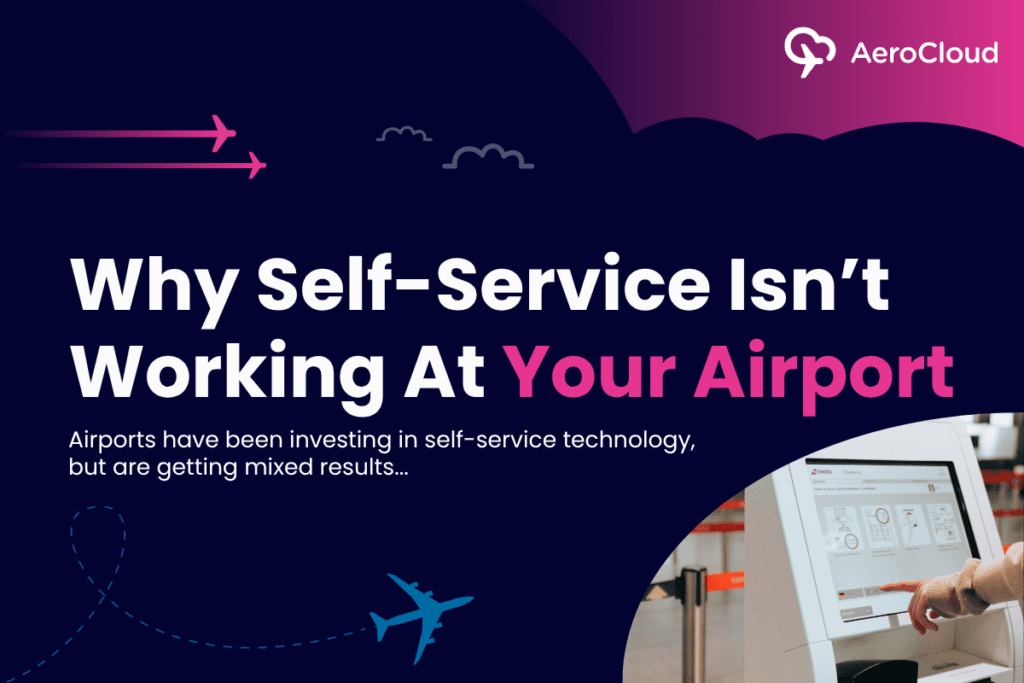
Airports are spending millions on self-service infrastructure. Most are still seeing queues.
Self-service technology has the ability to transform airport experiences. Shorter queues, faster check-in, fewer staffed desks absorbing costs that could be redirected elsewhere.
The investment has been significant, but for many airports, the results have been mixed.
74% of travelers prefer airports that offer contactless, self-service check-in. 81% of airports globally are already investing in self-service systems to reduce congestion. But in terminals across the world, you’ll still find kiosks that only serve a fraction of the airlines operating from that terminal, bag drop machines that require an agent to complete the process, and self-service infrastructure that’s created new queues rather than eliminating old ones.
The problem isn’t self-service. The problem is how it’s being deployed. And until airports address the root causes, their investment will keep underperforming.
Cost reduction ≠ efficient processes
Most self-service investments are justified on a single premise: fewer agents mean lower staffing costs. This logic isn’t wrong, but it doesn’t show the whole picture. When you plan the whole self-service deployment around cost saving, the results underperform.
When self-service is built purely around cost reduction rather than passenger flow, the consequences show up quickly. Kiosks aren’t properly maintained, hardware ages without a clear upgrade path, and technology hasn’t been updated to reflect new airline requirements. Agents who were freed from check-in desks are pulled back to assist at kiosks and gate staff absorb delays that started at check-in. The problem doesn’t disappear when self-service technology frustrates passengers rather than helping them.
Behind the scenes, inefficient passenger processing quietly drains airport budgets each year. Static infrastructure and underutilized equipment limit airport capacity, flexibility, and commercial potential. Self-service deployed as a cost-cutting measure can reinforce those very challenges airports are trying to solve.
The airline lock-in problem
One of the most expensive mistakes in self-service planning is deploying airline-specific kiosks.
When each carrier operates its own dedicated hardware, a terminal quickly fills with idle equipment. One airline’s peak hour is another’s quiet period, and dedicated kiosks can’t adapt to that. Often the kiosks sit unused, wasting valuable terminal space, generating maintenance costs, and contributing nothing to passenger throughput during the hours that the airline’s don’t operate. Self-service systems that eliminate dedicated, redundant hardware reduce energy consumption by up to 15%:
- Fewer idle machines
- Better use of existing infrastructure
- Smaller physical footprint across the terminal.
The passenger who gets left behind
Self-service systems should be accessible to everyone. When these gaps exist, airports end up running parallel systems — self-service for passengers who’s accessibility needs are met, staffed desks for everyone else — and the efficiency case falls apart.
Some of the most common gaps in self-service accessibility include:
- Kiosks that lack accessibility features.
- Bag drop systems that require passengers to manhandle heavy luggage without guidance or support.
- Screens that support both standing and seated users.
- Interfaces that aren’t intuitive for travelers who don’t fly frequently.
Accessibility can’t be a retrofit consideration. It needs to be designed in from the start. Hardware built with ADA/DDA compliance as standard, payment modules that work for every passenger, and modular components that can be upgraded without replacing entire units will keep your passengers independent and autonomously moving through the terminal.
The physical hardware also matters. Kiosks should be configured to fit your terminal layout, customized to reflect your branding, and adapted as the airport’s needs change. This flexibility is fundamentally a different investment from legacy systems that lock airports into a single vendor’s upgrade cycle.
Self-service without integration
A kiosk that can only print a boarding pass isn’t a self-service solution. It’s one step in the passenger journey that still requires travelers to queue somewhere else to complete the full check-in process.
Genuine self-service should complete the check-in process end-to-end in the passenger journey. It means checking in, printing a bag tag, scanning a passport, paying excess baggage charges, dropping a bag, and validating at the boarding gate – all without the passenger seeking staff assistance at any stage. That requires proper integration across the processing chain:
- Boarding passes
- Barcode readers
- Passport readers
- RFID bag tag compatibility
- Weigh scale integration for bag drop
- Real-time data accuracy flowing through gate management and the flight system.
It also means passenger validation at every passenger touchpoint, with timestamped, accurate tracking that gives your ops team a live picture of where passengers are and where delays are forming inside the terminal. When these systems are connected and working as one unified process, check-in times drop by up to 50%.
The commercial opportunity most airports are missing
Here’s the aspect that rarely makes into the self-service business case: what happens to passenger behavior when check-in is genuinely fast.
80% of passengers spend more in retail and food and beverage when check-in and security is smooth. That isn’t a soft benefit. It’s a direct commercial outcome of the operational investment an airport makes in its processing infrastructure. Passengers who clear check-in quickly arrive at their gate with more time to spend browsing duty free and stopping for a coffee. Passengers who have been wrestling with a broken kiosk or queuing at a help desk arrive stressed, rushed, and not in a spending mindset.
Airports that are leading the way treat self-service as a commercial lever, not just an ops tool. The check-in zone isn’t just about processing passengers efficiently. It’s the first part of an experience that either sets passengers up to maximize their dwell time or sends them to the gate already frustrated. Airports using integrated CUSS infrastructure have also seen up to a 20% improvement in passenger satisfaction. That feeds directly into return travel decisions and satisfaction scores which matter to the airlines that choose which airports to operate from.
What good self-service looks like in airports
The airports getting self-service right share a few things in common:
- They treat shared infrastructure as a strategic decision, not a cost measure.
- They build with accessibility in mind.
- They integrate processing end-to-end so that the passenger experience is genuinely frictionless rather than just faster for one step.
- They think about what happens after check-in.
The solution is Common Use Self-Service (CUSS) — shared kiosk infrastructure that serves multiple airlines from a single unit, automatically switching between software environments based on passenger input. It’s a fundamentally different model, and the results reflect that.
Cloud-native, hardware-agnostic, IATA-compliant CUSS platforms can support multiple airlines from a single kiosk, scale with passenger growth without terminal expansion, and integrate with the systems an airport already has in place. The barrier successful self-service at airport isn’t the technology. It’s making sure the deployment starts with the right questions.
Not “how do we reduce agent headcount?” but “how do we get every passenger through check-in faster, regardless of which airline they’re flying, and set them up for a better experience in the rest of the terminal?”
Today, 87 million Europeans live with impairments or disabilities, representing a massive market. Airports with genuinely accessible infrastructure create better passenger experiences, smoother airport operations and better commercial revenue optimization. AeroCloud CUSS reduces check-in times by 40-50%, with shorter queues and faster passenger processing. Keeping passengers of all abilities moving efficiently through terminals maximizes the dwell time spent in revenue-generating terminal zones.
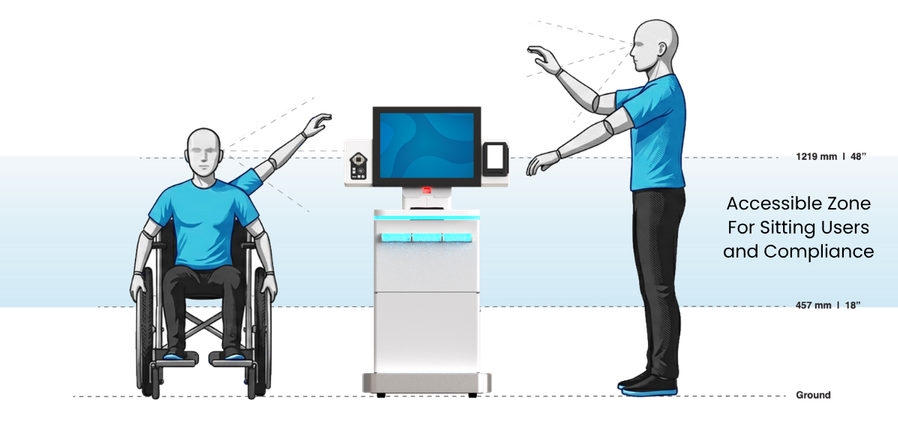
The clear and intuitive design of accessible infrastructure like AeroCloud CUSS Kiosks will make for faster and easier for use for both passengers and staff alike. Airports with accessible common use systems have reported reduced training requirements, faster processing times, and fewer operational errors.
Sarasota Bradenton International Airport scaled from 1.2 million to 4.3 million passengers through the same 12 gates and with no need for physical expansion. That kind of growth doesn’t happen by adding more dedicated hardware. It happens by making shared infrastructure work harder.
Read the full case study here.
Transform your airport’s self-service with AeroCloud
Self-service is more than just deploying kiosks. Here at AeroCloud, we help airports get it right from day one by building an integrated, passenger-first processing environment that reduces queues, drives commercial revenue, and scales with your airport’s growth. From our flexible, IATA-compliant CUSS platform to our full suite of Common Use passenger processing solutions, we build technology that works for every airline, every passenger, and every terminal configuration.
Interested in learning more about what AeroCloud can do for your airport?
Get in touch with our team and book your free demo today.